Tuesday, October 30, 2007

9th September


graphite/30x21cm

Also collected a few quinces from the garden &, studying the paintings of Euan Uglow at the time, set up a pair in close proximity, considering the space between & the background composition.


graphite/30x21cm

8th September


graphite/30x21cm

2nd September

I much prefer to draw & paint still life in natural light, but, given the subject matter in this case thought it might be an idea to incorporate the Chinese lantern into the composition & use it as the light source.


graphite/42x30cm

1st September

Presenting the first 2 examples of a series of recent still life drawings & watercolours, the subject of these one being a small pale blue-grey Japanese teapot & cups, the lower half of which are unglazed.


graphite/30x21cm


graphite & watercolour/30x22cm

Rebranding 'The Life Aesthetic...'

Enough, already, with the cyber-procrastination, the non-blogging, not updating, etc.
The decision taken to rebrand the blog formerly known as 'The Life Aesthetic..' (which did actually continue, despite the lack of posts descriptive of & pertaining to) seems the perfect opportunity to breathe a little life back into this moribund resource, the cyber arm of aesthetic & cultural operations.
Thus, 'The Opposite of Tomato', which has been for the better part of the last 5 years my all-time favourite question. Overheard being asked by a Liverpudlian child, to its mother, & seeming to present the philosophical conundrum par excellence, it's been something deemed worthy of almost constant pondering: indeed, such might be said to be a prerequisite of 'the life aesthetic' & the ever-vigilant state of consciousness & apprehension this modus operandi itself requires.
'The opposite of tomato' could indeed be just about anything, of course, dependant on context or whatever, but somehow it seems the answer must lie out there in the great space of culture, & perhaps more specifically art of a visual nature...anyhoo, whatver might be subsequently posted here is intended to in some way address this question (as indeed has everything previously posted). Here goes...

Monday, July 16, 2007

Found ‘Still Life’ in the Landscape

A new year stroll along a local woodland trail resulted in an encounter with a couple of curious readymade ‘still life’ arrangements featuring discarded items of clothing - all clean and in a wearable condition, as may be readily observed - as their subject matter. The first intrigued me particularly through the manner in which a pair of jeans had been carefully folded and draped upon a convenient ‘plinth’, exhibited as might be an artefact or object of interest for the convenience of passers-by. For anyone even vaguely versed in the methods of contemporary artistic practice and display, such an ‘installation’ might not appear especially surprising, yet still the jeans’ presence, deliberately placed upon a pedestal thus, invites speculation as to the ‘why’ and ‘how’ of such, draws the beholder into their (human) narrative and might also encourage imaginative expansion of the story in anyone so inclined.


Further along the trail were to be found more clothes, this time a collection/selection of such, more casually scattered yet still with something of a suggestion of being composed, particularly the manner in which the sleeve of the dark blue top, set apart from the others, grouped, points to the red & black one, which itself is positioned at a narrow interval apart from the main group, establishing an element of spatial dynamic as might be expected to exist between the elements of a still life composition. The naturally scattered elements such as leaves & twigs also contribute to the picture created, the whole composition of objects and the ‘tactile space’ (see Georges Braque) of the ground.


Of course, it’s just as possible to view these discarded clothes not as in some way being artistic, their placement as being in any way creative, but their presence as being, rather, invasive, even destructive - simply alien to & littering the environment. The surprise element of seeing such vividly-obvious evidence of human presence along the trail draws one’s attention then to just how much other stuff has been abandoned by people along it (from such expected small-scale items as food packaging to those perhaps less so and somewhat larger including dumped & decomposing furniture and burnt-out vehicles) and its immediate wooded environs. Subsequently, one might then consider the fact that the trail itself is man-made (as indeed was the railway which, falling into disuse and abandoned, preceded it), facilitating human passage through the natural, ‘unspoilt’ environment and thus the potential for discarding foreign elements amidst it. This then inevitably suggests questions about larger, even more permanent man-made and wholly unnatural interventions in, intrusions into, the natural world and, perhaps, the environmental consequences of such. But still one returns to the original point and the presence of ‘art’ - deliberate or merely just perceived as such by someone possessed of the sensibility or imagination to do so - in the landscape.

Sunday, October 22, 2006

Cezanne

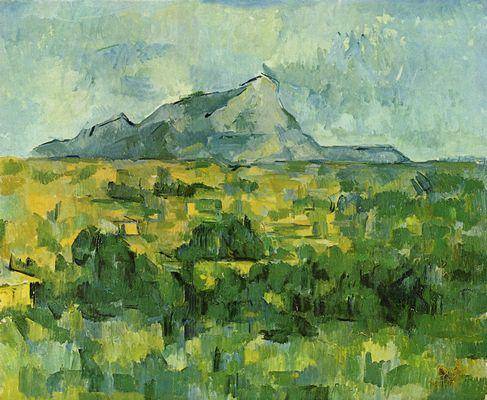
Today marks the centenary, to the very day, of the passing of Paul Cezanne, the father of modern painting & a great personal hero. I wasn't aware of the actual date (only the year) of his death until late last night, whilst watching the Phaidon video of Cezanne's life & work, loaned from the college library that has recently come to be the site of the latest day job. Towards the end of the film, a shot scans across the surface of his tombstone, revealing the death date as being 22 Octobre 1906, a scene I was watching shortly after the clock had ticked over past midnight into today: a most strange coincidence but fitting indeed. Here's an iconic image to mark the event.

Sunday, October 08, 2006

'Current' artwork

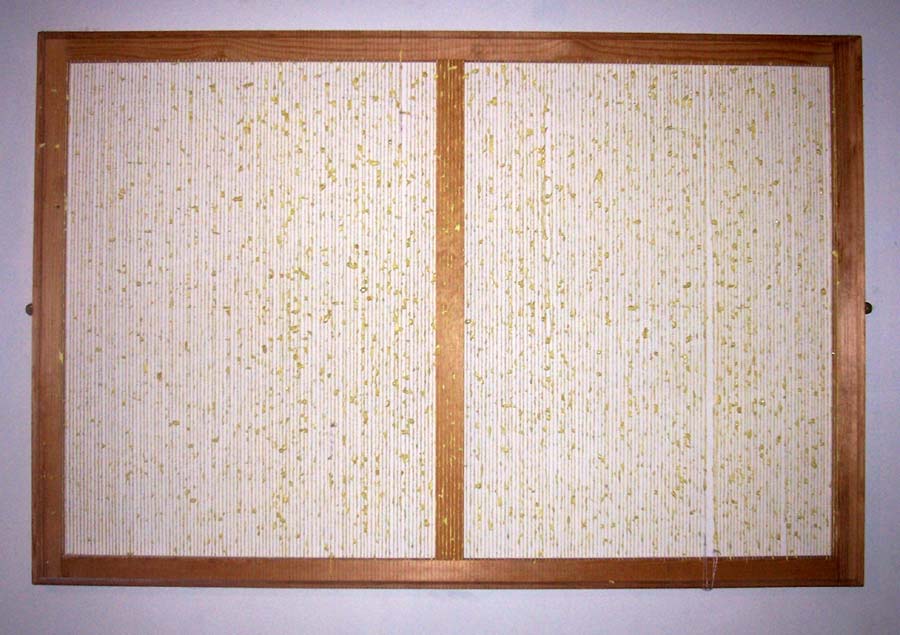
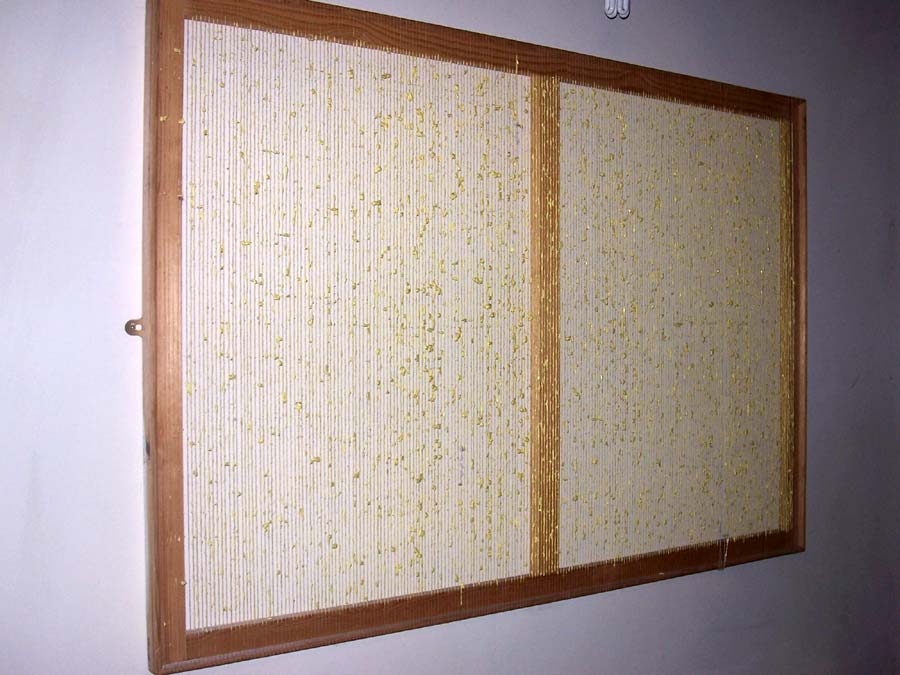
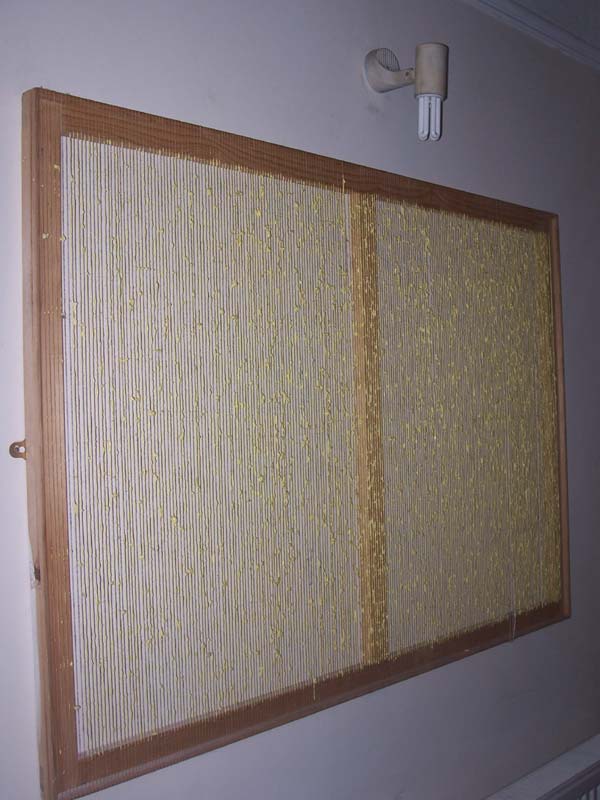
Recently took the opportunity to photograph one of my old-yet-still-most-recent pieces of art work in situ at a friend’s home. This work is now 5 – 6 years old, initiated within an academic environment, but still represents my most recent serious creative practice &, I believe, having recently(ish) read James Meyer’s ‘Minimalism: Art & Polemics in the 60s’ & refreshed my memory with some of the concerns & ideas that informed this small body of work-in-progress, might still provide scope for further exploration should circumstances ever allow.
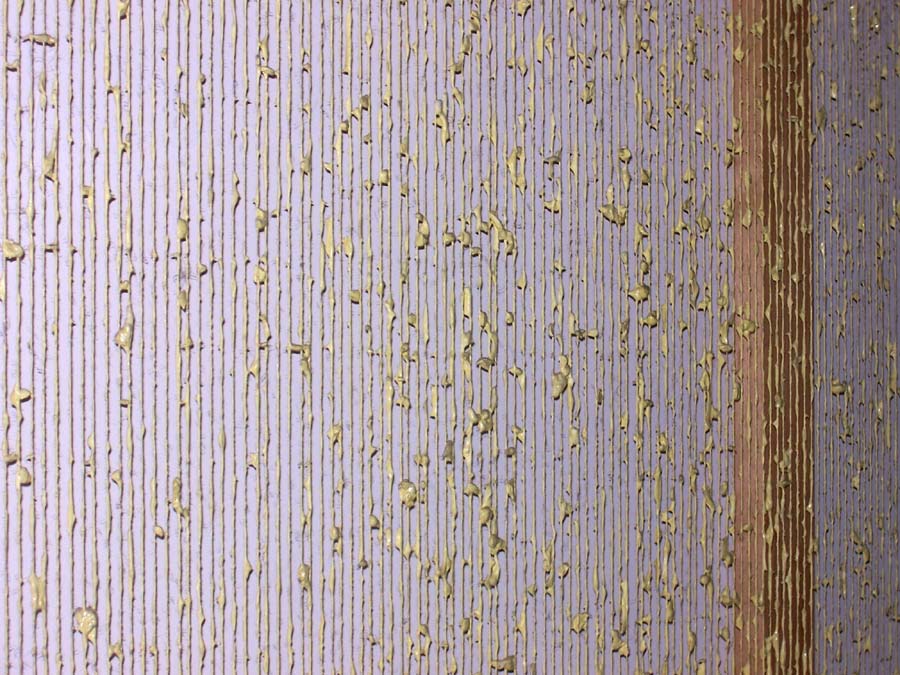
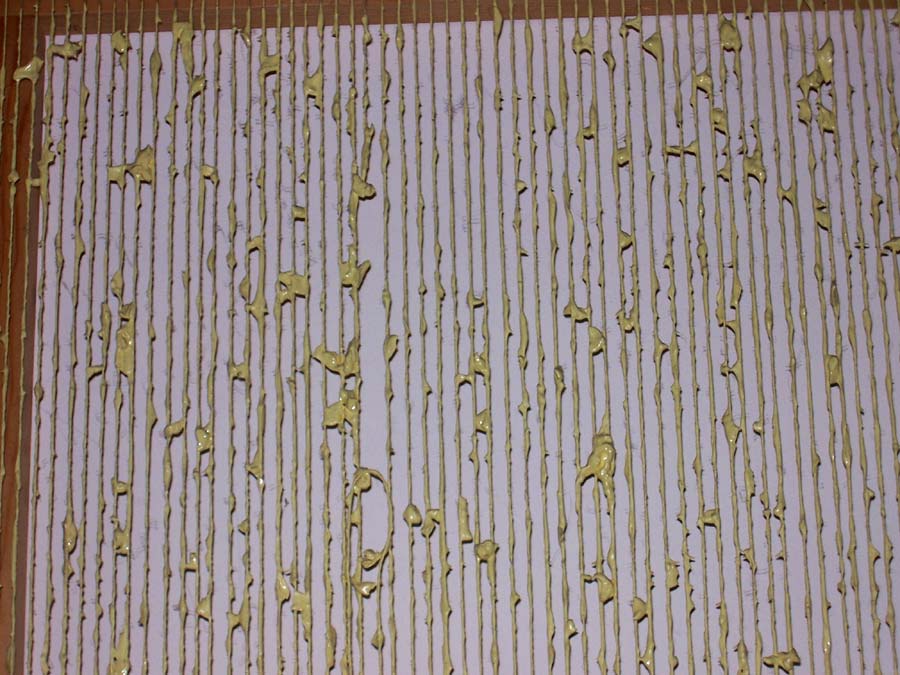
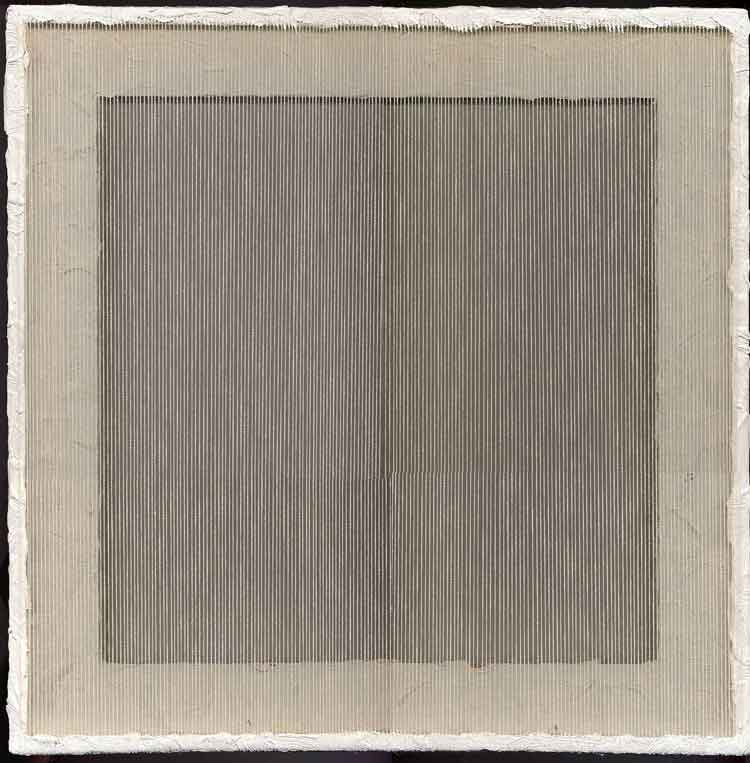
Although still images are inadequate to properly describe the true nature of this piece, a selection of photos of it & some related work follow, & then some form of explanation into the ideas & intentions behind its making is included, being essentially a statement – which still probably provides the most cogent & appropriate exposition - accompanying the work as it appeared on my old personal website, now becalmed.


Next is another 'stringed' piece, this time with no paint applied to the threads, merely to the stretcher (this results in a particularly 'gossamery' surface effect when viewed actively), followed by a related work, this time utilising a grid of threads, the oil paint slathered thickly over the whole surface then allowed to fall through, some, obviously onto the stretcher.


This is the original statement - by no means new itself but still seeming relevant - accompanying the work.

“The following small body of work, to be regarded as proposals, sketches, for work yet to be made, comprises examples of the ideas informing the direction in which I intend my progressive practice to develop.

The objects are created with the intention of being 'moving pictures', combining drawing and painting in a three-dimensional form that emphasizes the physicality and facture of the work and demands an embodied, active participation of the spectator in the realisation of the 'work of art' and recognition of a shared physical presence in the world.

In formal terms, the objects draw on a modernist and minimalist vocabulary of simple line and grid structures which act as both drawing and the physical framework to which paint is applied (or not). The open nature of these structures allows the works to function three-dimensionally and explore possibilities beyond the surface, incorporating the wall upon which the objects are hung as an essential component of the work, as the 'screen' upon which shadows are projected and form part of the drawn/painted image.

As a full appreciation of this effect depends upon the spectator moving across the picture plane, causing an optical 'ripple' to pass over it in the case of the vertically strung works, or moving in more closely to observe the fall of the paint through the grid onto the stretcher behind in the other, gridded, instance, the physical space occupied by the object also extends in front of it into that of the spectator, setting up a dialogue between the former and the embodied consciousness of the latter, as would occur during the course of viewing a sculpture or other 3D object 'in the round'.

In each instance, process is essential to the creation of the work and recognition and understanding of the 'work of the work' which, in its reception, becomes an ongoing, unresolved aspect of each piece.
First, a stretcher was constructed and then a piece of canvas, as would usually be stretched over such a structure, was unpicked thread by thread before being stretched in the same manner, and 'rewoven' in the case of the grid piece. Thick, only slightly thinned oil paint was applied to either the canvas threads or the stretcher; spread evenly across the grid, upon which it either sat or fell through, or brushed, drawn, horizontally along the length of one of the vertically-strung pieces, where it would form random clumps, or similarly fall to sometimes link neighbouring threads.

These processes lead to works that combine, initially, strict order and then pure chance; two- and three-dimensionality as essential qualities of their nature; question the integrity of the picture plane whilst remaining pictorial in nature, and feature drawing and painting as both separate and conjoined aspects of their making and being.

It is intended that the vertically strung pieces will develop on a much wider, 'panoramic' scale, which seems a necessary condition of the full realization of the optical nature of their surface effects as 'moving pictures' enabling recognition of the viewer's embodied and temporal existence in physical space”.


Interesting to note that, given the recent photos taken & posted of that damaged wire fence, as ‘drawing in space’ (see previous post), my concerns do seem to have endured, despite a significant period of not-making artwork, certainly of this nature.

Friday, September 15, 2006

Drawing in Space, ‘Art’ in the Landscape

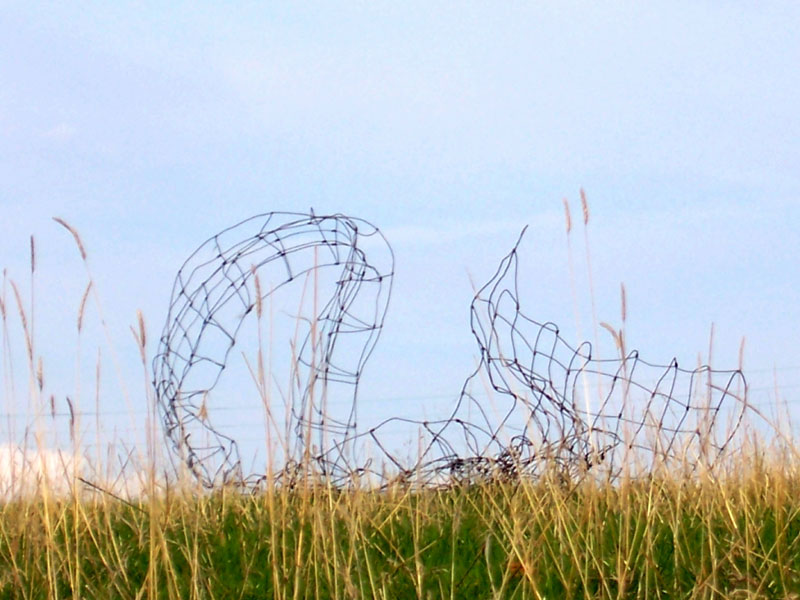
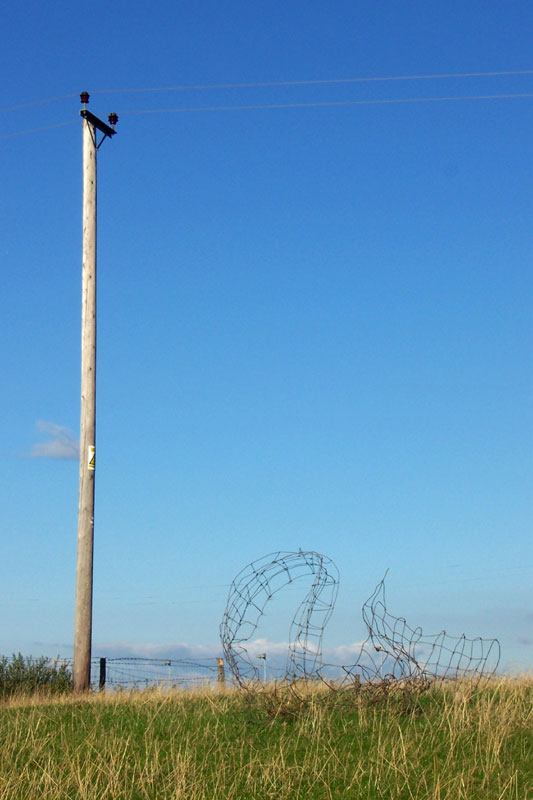
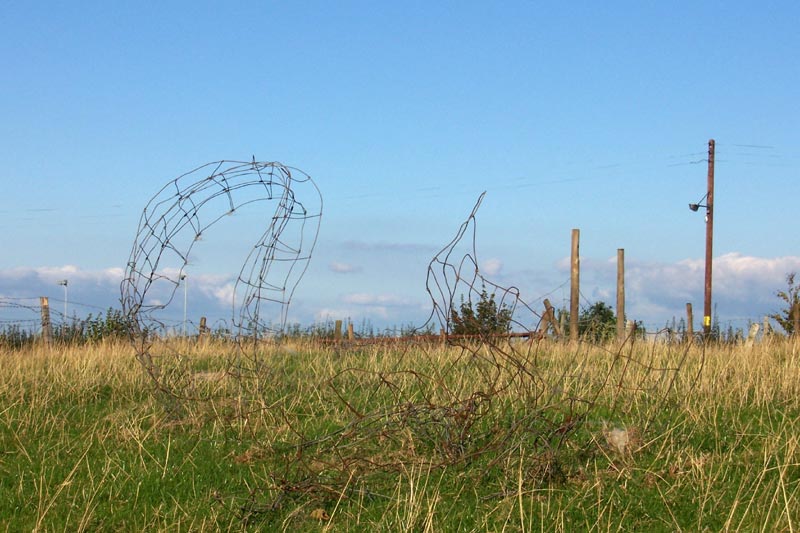
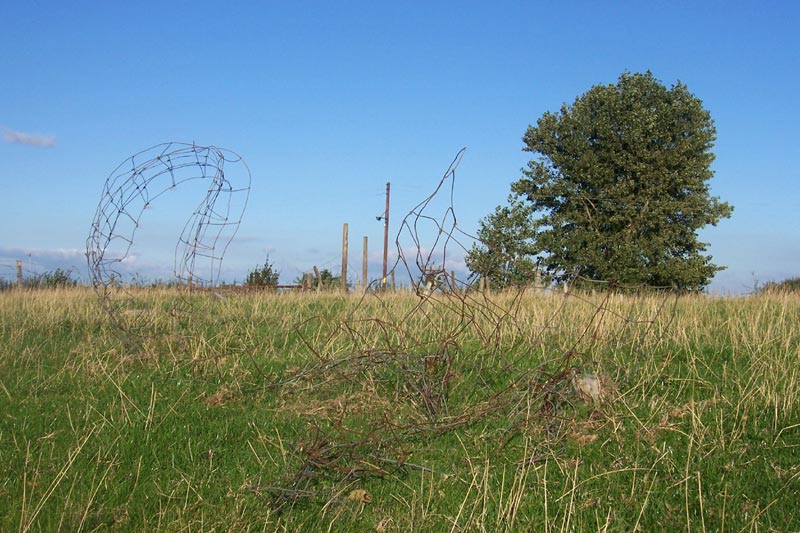
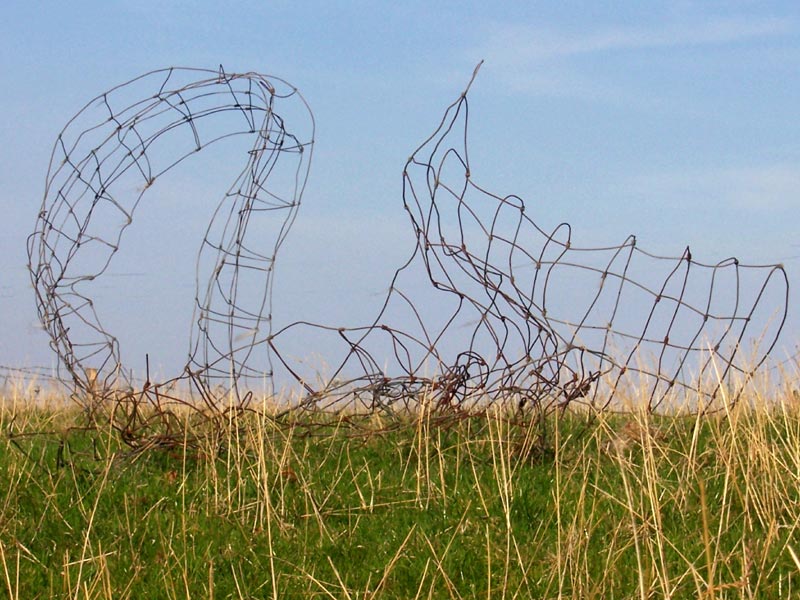
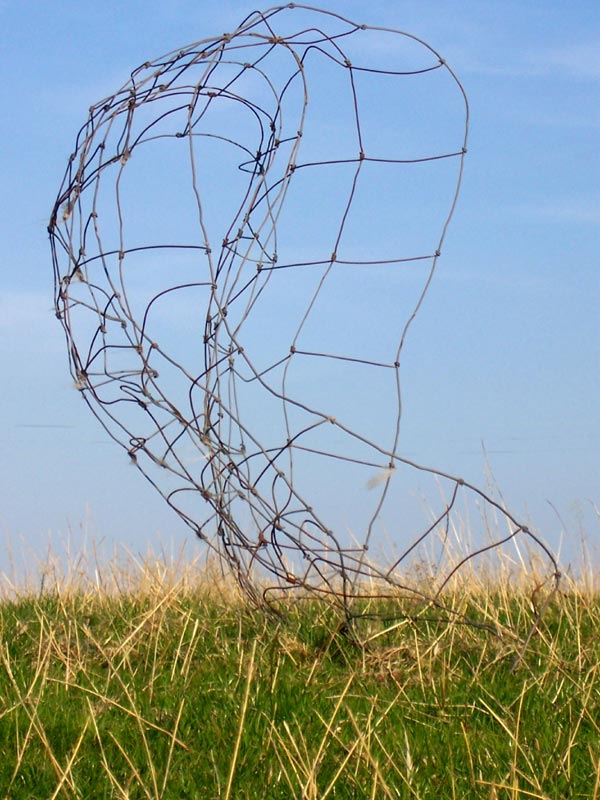
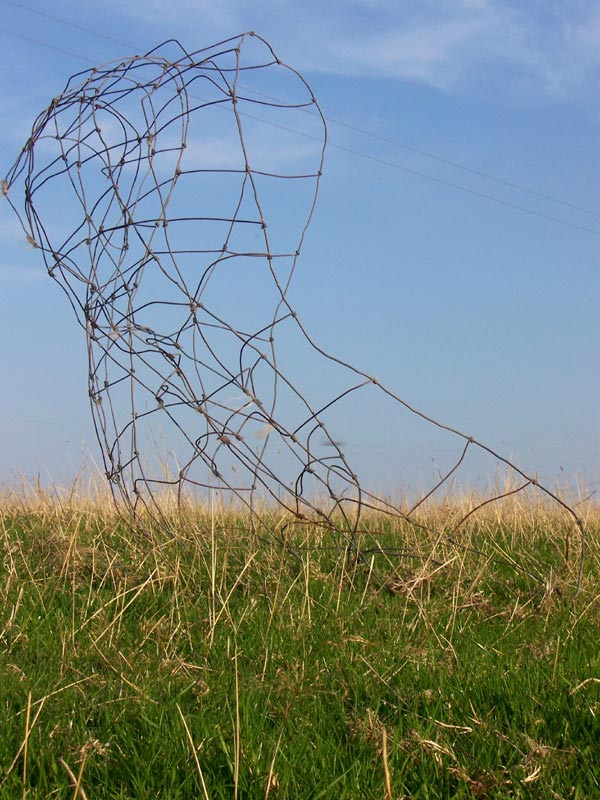
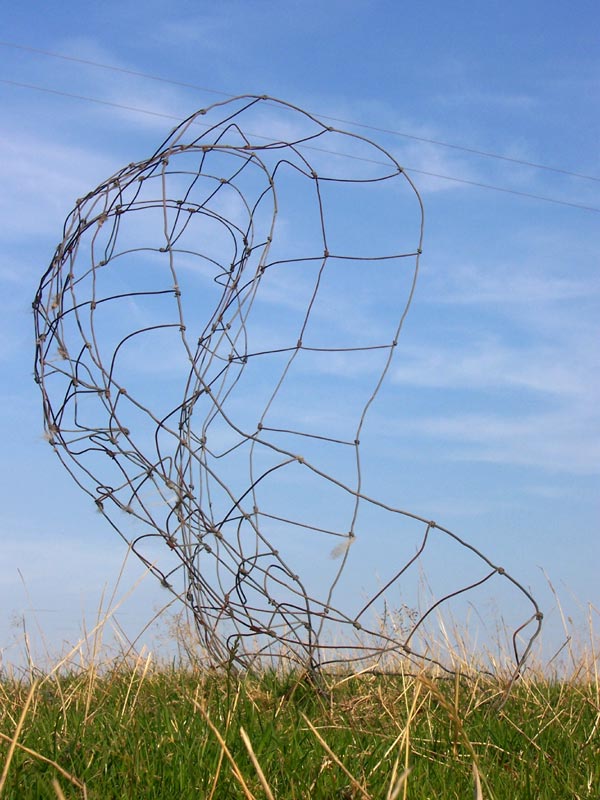
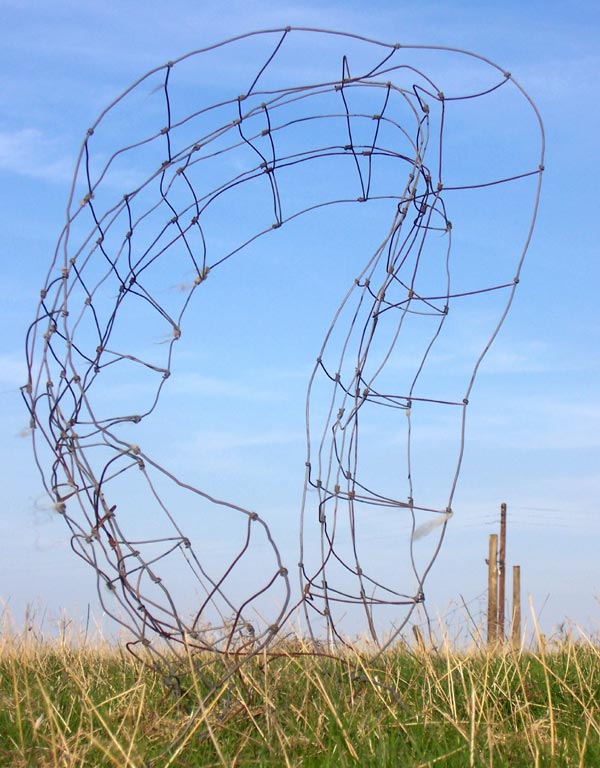
A recent walk in the nearby countryside led to the discovery of, an encounter with, what might be termed an unintentional sculpture, or perhaps, given the thing’s linear nature, a drawing in three-dimensional space. ‘The thing’ is in fact a broken down section of wire fence, barely noticeable against the grass upon which it lies when walking close to it, past it, yet striking when approached from below, walking uphill towards it, viewed against the sky, as I hope the following photographs may illustrate.

Viewed from a variety of angles, ‘in the round’ as any 3D object should properly be appreciated to achieve a full sense of its form, the fence/drawing displays a pleasing combination of, & play between, horizontal & vertical elements, a free-flowing, open tracery of sensual, curving, delicate-yet-purposeful lines & more massive, scribbly agglomerations or ‘passages’, which gives it too a sense of energy & something of a dynamic quality suggestive of movement, of flow. The lines, of course, exist in three dimensions, creating interesting forms such as – dependent upon viewpoint - helix-like combinations of curves, loops & more severe, jagged peaks & aggressively twisted folds, these latter similar, indeed, to aspects of the landscape such as rock formations. Whatever, these accidental transformations wrought have something of a ‘rightness’ to them & bring this to the whole & an appreciation of it, as art (designated). Also present may be observed a certain 'measured', point-to-point or join-the-dots effect appropriate to drawing, courtesy of another of the fence’s physical features, the loops that serve to keep separate the individual squares of the design.

The whole, I think, has a certain elegance and aesthetic quality that transcends its damaged state & consequent removal from a functional context, & provides an interesting addition to the landscape of which it is an organically-evolving, interactive part (note the tufts of sheep’s wool adhering in places to the fence).

The images are presented in a sequence that intends to convey something of the experience of encountering the ‘drawing’ in the landscape, seen & composed in relation to other aspects of its surroundings such as telegraph poles & wires, trees, the long grass in which it resides & which constitute another element of pictorial ‘mark-making’, etc.


Wednesday, September 06, 2006

King Ink’s Silver Jubilee

On a whim, browsing through the CDs for some sounds to provide entertainment & perhaps inspiration, I decided to give my self-compiled Birthday Party collection (its contents in fact very similar to the officially-released ‘Hits’ CD) a listen for the first time in a while. Recalling experiencing the band in concert some 25 years ago, at the Royal Court in Liverpool (bottom of a bill that also featured Vic Godard & the Subway Sect during Vic’s lounge-crooner phase and headliners Bauhaus with, even more bizarrely, a selection of reggae records played between the bands), it struck me forcibly how fresh & vital the ’Party’s music and, for example, a classic song such as ‘King Ink’ in particular, was then and still sounds now, across that passage of time: such a silver jubilee seems worthy of recognition and celebration, I believe. In fact, other than a couple of gigs at a local FE college, featuring a selection of local bands, that gig was the 1st proper one I attended and thus the ’Party could claim to be the 1st proper band (as in one on a bona fide record label – 4AD – and heard on Peel, the ultimate stamp of authority as it were) I was fortunate enough to see live: wow - what an intro to the experience. I recall the sheer spectacle of Nick Cave's performance, a retching, bent-double stick insect, Rowland Howard a deathly-white, chain-smoking caryatid, Tracey Pew's stetson, Mick Harvey's keyboards tottering atop a stack of plastic milk crates - what a great, great band. The violence of some of this music is still shocking, and liberating. The Friend Catcher, Zoo Music Girl, A Dead Song, Nick the Stripper, Figure of Fun, Release the Bats, She’s Hit, Big-Jesus-Trash-Can, Kiss Me Black, 6" Gold Blade, Junkyard: all that howling and screeching and squawking and flailing and flaying and (death-)rattling and pounding and clattering and battering, antic, frantic and breathless, those songs teetering on the edge of tumbling down the stairs, arse over tit, to be consumed in the dark, bat-infested voids they melodramatically describe with such unwholesome relish &/or disgust, and left broken, twitching, smouldering, bloody. It might, in fact, be more appropriate to term The Birthday Party’s dank, swampy, scratchy music collectively as ‘abattoir blues’ rather than Nick Cave’s recent album of that very name. Interesting too, to compare it with Cave’s later crooning balladry, most fully realised on ‘The Boatman’s Call’ album and other, numerous examples scattered across his oeuvre, especially perhaps something as lush as the gorgeous, swooning, string-drenched ‘Love Letter’, which is quite a sonic journey to have travelled, along which may be experienced many peaks.

More Australian music, or music by Australians.

I posted in the New Year, more than once, enthusiastically and with great anticipation, on the subject of the wonderful sounds of Sol Seppy, and eventually took delivery of her album some time ago now. And most engaging it’s proved to be, too, a worthwhile addition to the music collection. I’ve found it to be, overall, a quieter listen than expected – the tantalizingly-offered likes of ‘Slo Fuzz’ and ‘Move’, sonically recalling My Bloody Valentine, being exceptions rather than the album as a whole’s rule, which is much more acoustic and reflective, where piano and cello predominate the instrumental soundscape - a lovely, intimate experience, best enjoyed through headphones to appreciate the drifting subtleties of the music and the spaces it creates. As previously noted, all sorts of references and influences can be discerned – there’s a delightful Cocteau Twins moment during ‘A to N’, just as it takes off, for instance, in addition to Sparklehorsey-type wheezings and such, My Bloody Valentine, etc - yet still the result is highly idiosyncratic and more than merely the sum of such parts: well worth a listen & getting to know.